Thai Drunken Noodles Recipe – Quick Street Style Flavor
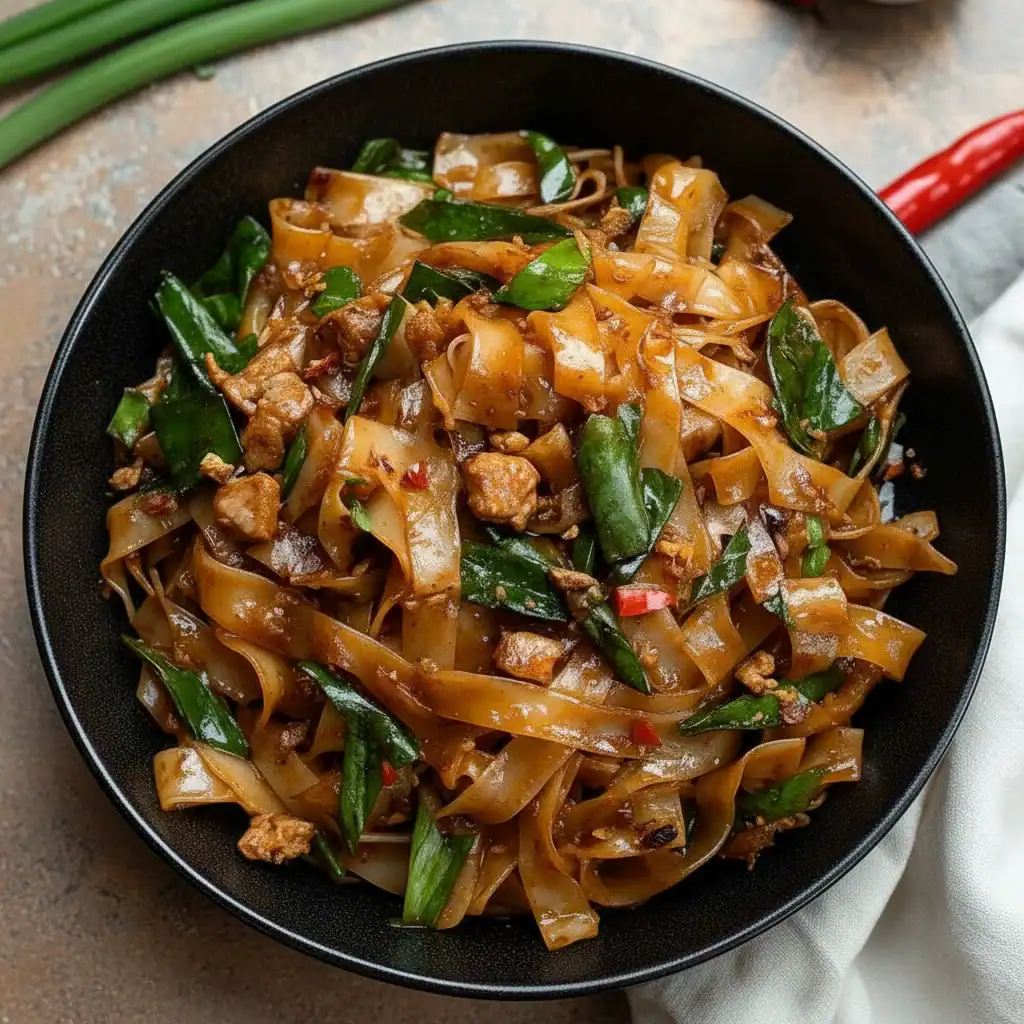
There’s a certain magic that happens in a searingly hot wok. The sharp sizzle as ingredients hit the oil, the fragrant steam that billows up, and the deep, savoury aroma that fills the kitchen in seconds. That’s the experience I chase every time I make this Thai Drunken Noodles recipe, also known as Pad Kee Mao. It’s a dish that transports you straight to a bustling Bangkok street stall, with its bold flavours and satisfyingly chewy noodles. I’ve been making this for over 7 years, and it never disappoints.
What makes this particular recipe so special is the harmony between the intensely savoury sauce, the fiery kick from fresh chillies, and the distinct, peppery perfume of holy basil. The wide, flat rice noodles are the perfect vehicle, soaking up every last drop of the dark, flavourful sauce. Unlike Pad Thai, which is nutty and sweet, Pad Kee Mao is unapologetically bold and savoury. We’re not aiming for subtlety here; we’re building layers of deep, satisfying flavour.
This is a brilliant dish for a weeknight when you’re short on time but craving something with a real personality. It’s for anyone who loves big flavours and a bit of heat. The entire meal comes together in less than half an hour, making it faster and infinitely more rewarding than ordering a takeaway. Let’s get the wok fired up.
Recipe Overview
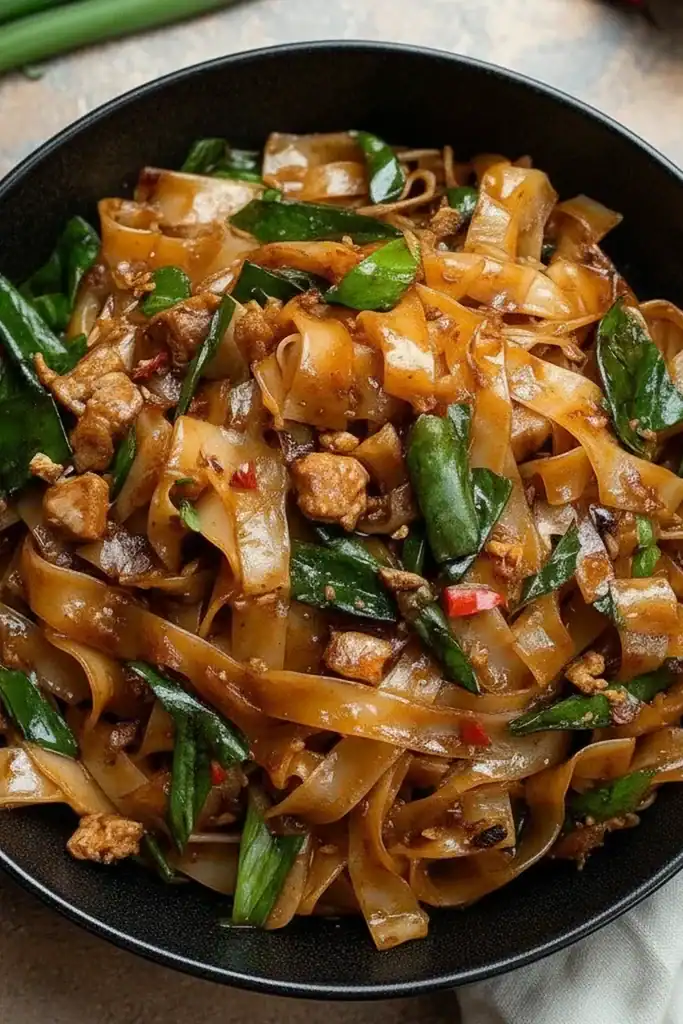
This street style noodle dish delivers a powerful combination of spicy, savoury, and aromatic notes. The sauce is a blend of salty soy, rich oyster sauce, and a touch of sweetness to balance the heat. The chicken is tender, the vegetables have a slight crunch, and the fresh holy basil added at the end provides an essential, authentic fragrance. After testing many variations, I’ve found that using fresh, wide rice noodles gives the absolute best texture, as they stay wonderfully chewy and don’t clump together.
- Prep Time: 15 minutes
- Cook Time: 10 minutes
- Total Time: 25 minutes
- Servings: 2-3 people
- Difficulty: Medium
Why You’ll Love This Thai Drunken Noodles Recipe
- Genuine Flavour: We build an authentic taste profile using a specific blend of dark soy sauce for colour and molasses notes, light soy for saltiness, and rich oyster sauce for umami depth. The fresh chillies and holy basil are non-negotiable for that classic Pad Kee Mao character.
- Ready in Under 30 Minutes: From the first chop to the final garnish, this dish is on the table in about 25 minutes. It’s a truly impressive meal that’s straightforward to make on any night of the week.
- Flexible Recipe: This recipe works beautifully with different proteins. Try it with thinly sliced sirloin steak, king prawns, or even firm tofu for a vegetarian option. You can also add other vegetables like baby corn or mange tout.
- Great for a Spicy Food Fix: Ideal when you want a meal that packs a punch. You have complete control over the heat level, so you can make it as mild or as fiery as you like.
- Family Tested: This recipe always gets compliments in my house. My husband, who loves spicy food, always asks for an extra sprinkle of chopped chillies on top.
Ingredients You’ll Need
You can find most of these ingredients in the world food aisle of a large supermarket or at an Asian grocery store, which is the best place to find the fresh rice noodles. For the sauces, I always reach for quality brands like Megachef or Healthy Boy, as they form the backbone of the dish’s flavour.
- For the Sauce:
- 2 tbsp oyster sauce
- 1 tbsp dark soy sauce
- 1 tbsp light soy sauce
- 2 tsp fish sauce
- 1 tsp granulated sugar
- For the Stir-Fry:
- 1 tbsp vegetable or rapeseed oil
- 2 large chicken breasts (about 300g), thinly sliced
- 4-5 cloves of garlic, finely chopped
- 2-4 red bird’s eye chillies, finely sliced (adjust to your spice preference)
- 1 red pepper, deseeded and sliced
- 100g green beans, trimmed and cut into 2-inch pieces
- 400g fresh wide flat rice noodles (sometimes called ‘ho fun’)
- A large handful of holy basil leaves (or Thai sweet basil if unavailable)
- 1 spring onion, finely sliced, to garnish
Sara’s Tip: If you can’t find fresh rice noodles, you can use dried ones. Soak them in warm water (not boiling) for about 15-20 minutes until they are pliable but still have a firm bite. Be careful not to overcook them at this stage as they will cook further in the wok.
How to Make Thai Drunken Noodles
The key to a great stir-fry is preparation. Get all your ingredients chopped, measured, and ready to go before you even think about turning on the hob. The cooking process is very fast, so you need everything within arm’s reach.
- Prepare the Sauce: In a small bowl, whisk together the oyster sauce, dark soy sauce, light soy sauce, fish sauce, and sugar. Set it aside.
- Prepare the Noodles: If using fresh noodles, gently separate them with your hands. If they are very stiff, you can microwave them for 30 seconds or briefly rinse them under warm water to loosen them up. Pat them dry.
- Heat the Wok: Place a wok or a large, heavy-bottomed frying pan over a high heat. Let it get screaming hot – you should see a little smoke rising from the surface. Add the vegetable oil and swirl to coat the pan.
- Cook the Aromatics and Chicken: Add the chopped garlic and chillies to the hot oil and stir-fry for about 20-30 seconds until fragrant, being careful not to let the garlic burn. Add the sliced chicken and spread it in a single layer. Let it sear for a minute before stir-frying for another 2-3 minutes until it’s lightly golden and almost cooked through.
- Add the Vegetables: Add the sliced red pepper and green beans to the wok. Continue to stir-fry over a high heat for 2-3 minutes. You want the vegetables to be tender but still retain a bit of a crisp bite.
- Combine Noodles and Sauce: Add the separated rice noodles to the wok. Pour the prepared sauce mixture over everything. What works best for me is to use tongs or two spatulas to gently toss everything together, ensuring every noodle is coated in the glossy sauce. Continue to cook for 1-2 minutes until the noodles have softened and absorbed the flavour.
- Add the Basil and Serve: Turn off the heat. Add the large handful of holy basil leaves and toss them through the noodles for about 20 seconds. The residual heat will wilt them perfectly while preserving their incredible aroma.
- Garnish and Serve Immediately: Divide the Pad Kee Mao between two bowls. Garnish with the sliced spring onion and serve immediately while it’s piping hot.
Tips From My Kitchen
- Temperature Control: Do not be afraid of high heat. A properly heated wok is essential for achieving the signature smoky flavour known as ‘wok hei’. If your ingredients are stewing or steaming, your pan is not hot enough.
- The Secret Step: I learned that adding the holy basil right at the end with the heat turned off is the most important step for flavour. It’s a delicate herb, and cooking it for even a minute too long will destroy its unique, peppery fragrance.
- Make-Ahead: The best way to prep this dish is to get your *mise en place* ready. You can slice all the vegetables and chicken, and mix the sauce ingredients together hours in advance. Keep them in separate airtight containers in the fridge until you’re ready to cook.
- Storage: Store any leftovers in an airtight container in the refrigerator for up to 2 days. To reheat, you can microwave it or briefly stir-fry it in a hot pan with a splash of water to loosen the noodles.
Common Mistakes to Avoid
- Overcrowding the pan: If you add too much to your wok at once, the temperature will drop dramatically. This causes the ingredients to steam in their own juices instead of getting that beautiful sear. If your wok isn’t very large, it’s better to cook this recipe in two separate batches.
- Using the wrong temperature: A common mistake is cooking on a medium heat. For this street style noodle recipe, high heat is your friend. It cooks everything quickly, locks in texture, and develops that all-important smoky char.
- Not preparing your ingredients first: A stir-fry cooks in just a few minutes. There is no time to be chopping garlic while your chicken is in the pan. Have every single component prepared and lined up next to your hob before you turn on the flame.
Delicious Variations to Try
Once you’ve mastered the basic recipe, it’s fun to experiment. The sauce is a fantastic base for all sorts of combinations.
- Spicy Version: For those who love serious heat, don’t just add more chillies. Try adding a teaspoon of Thai chilli paste (Nam Prik Pao) to the sauce for a deeper, more rounded spice. If you love a good kick, you might also like my recipe for Bang Bang Chicken Thighs.
- Vegetarian/Vegan Option: Swap the chicken for 300g of firm, pressed tofu, cut into cubes. Use a vegetarian “oyster” sauce (made from mushrooms) and replace the fish sauce with an extra teaspoon of light soy sauce to keep it fully plant-based.
- Different Protein: This dish is fantastic with 250g of thinly sliced beef sirloin (add it just like the chicken) or 200g of raw king prawns (add them with the vegetables and cook until they turn pink).
What to Serve With Thai Drunken Noodles
Pad Kee Mao is a complete meal in itself, but a couple of small additions can round it out nicely.
- Cooling Cucumber Salad: A simple side of sliced cucumber, red onion, and coriander tossed in a light dressing of rice vinegar, a pinch of sugar, and a drop of sesame oil provides a brilliant, fresh contrast to the noodles’ heat.
- Crispy Prawn Crackers: Light, airy prawn crackers are great for scooping up any leftover bits of sauce from the bowl.
- Cold Lager: A crisp, cold Thai beer like Singha or Chang is the classic and, in my opinion, the best pairing. It cuts through the spice and richness beautifully.
Frequently Asked Questions
Thai Drunken Noodles Recipe
Ingredients
Method
- Prepare the Sauce: In a small bowl, whisk together the oyster sauce, dark soy sauce, light soy sauce, fish sauce, and sugar. Set it aside.
- Prepare the Noodles: If using fresh noodles, gently separate them with your hands. If they are very stiff, you can microwave them for 30 seconds or briefly rinse them under warm water to loosen them up. Pat them dry.
- Heat the Wok: Place a wok or a large, heavy-bottomed frying pan over a high heat. Let it get screaming hot – you should see a little smoke rising from the surface. Add the vegetable oil and swirl to coat the pan.
- Cook the Aromatics and Chicken: Add the chopped garlic and chillies to the hot oil and stir-fry for about 20-30 seconds until fragrant, being careful not to let the garlic burn. Add the sliced chicken and spread it in a single layer. Let it sear for a minute before stir-frying for another 2-3 minutes until it's lightly golden and almost cooked through.
- Add the Vegetables: Add the sliced red pepper and green beans to the wok. Continue to stir-fry over a high heat for 2-3 minutes. You want the vegetables to be tender but still retain a bit of a crisp bite.
- Combine Noodles and Sauce: Add the separated rice noodles to the wok. Pour the prepared sauce mixture over everything. What works best for me is to use tongs or two spatulas to gently toss everything together, ensuring every noodle is coated in the glossy sauce. Continue to cook for 1-2 minutes until the noodles have softened and absorbed the flavour.
- Add the Basil and Serve: Turn off the heat. Add the large handful of holy basil leaves and toss them through the noodles for about 20 seconds. The residual heat will wilt them perfectly while preserving their incredible aroma.
- Garnish and Serve Immediately: Divide the Pad Kee Mao between two bowls. Garnish with the sliced spring onion and serve immediately while it's piping hot.
Notes
I really hope you enjoy bringing the vibrant, bold flavours of this Thai Drunken Noodles recipe into your own kitchen. It’s a dish that never fails to satisfy that craving for something savoury, spicy, and deeply flavourful. If you’re looking for a sweet treat to follow this spicy main, my Biscoff Truffles are always a hit. Please let me know how you get on by leaving a comment below. I love hearing about your cooking adventures!
Happy cooking,
Sara