Japchae Sweet Potato Noodle Recipe – Korean Glass Noodles
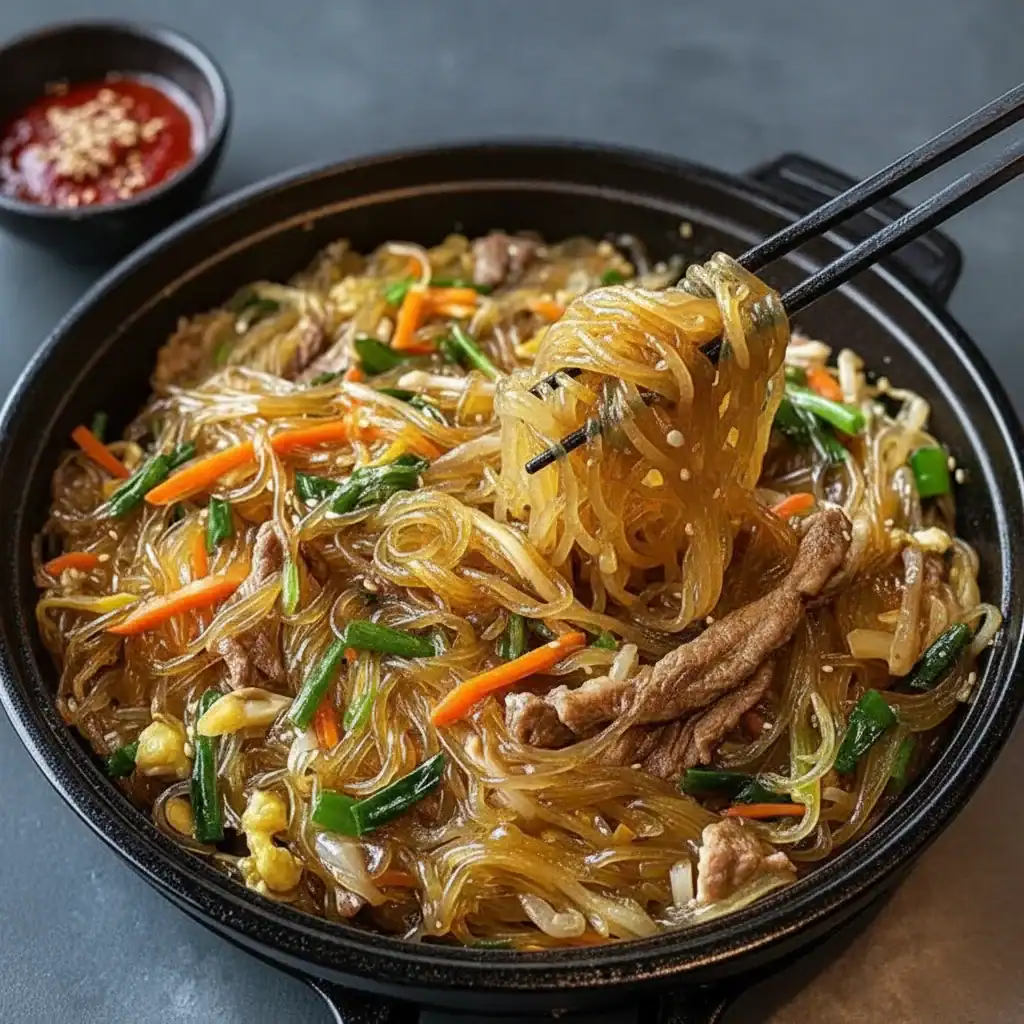
There’s something truly special about a bowl of Japchae. The glossy, slightly chewy sweet potato noodles, the colourful mix of crisp vegetables, and the tender, savoury beef all come together in a dish that feels both comforting and sophisticated. It’s a centrepiece of Korean cuisine for good reason. For years, I used to find Japchae a bit intimidating with all its components, but I’ve since streamlined the process without losing any of that authentic flavour everyone loves.
This Japchae sweet potato noodle recipe is my go-to version, perfected over many dinners and family gatherings. What makes it stand out is the balance in the sauce—it’s savoury from the soy sauce, with a hint of sweetness from honey and a deep, nutty aroma from toasted sesame oil. Each element, from the sautéed spinach to the strips of marinated beef, is cooked separately to preserve its unique texture and flavour before being tossed together. It’s a method that requires a little patience, but the final result is absolutely worth it. The noodles absorb the sauce beautifully without becoming soggy, and every bite offers a delightful combination of textures.
This is the kind of dish that works wonderfully for a weekend dinner when you have a bit more time to enjoy the cooking process. It’s also fantastic for sharing with friends, as it can be served warm or at room temperature. If you’re looking for a Korean noodle recipe that is both satisfying and visually stunning, this beef japchae is the one you’ll come back to again and again.
Recipe Overview
This Japchae recipe brings together chewy Korean glass noodles with tender beef and a vibrant selection of vegetables, all coated in a classic savoury-sweet sauce. The key is in the preparation: each component is cooked individually to perfection before being combined at the end. After a few attempts, I realised that marinating the beef for at least 20 minutes is non-negotiable—it makes the meat incredibly flavourful and tender. Expect a delightful mix of textures and a beautifully balanced taste that always gets compliments.
- Prep Time: 25 minutes
- Cook Time: 20 minutes
- Total Time: 45 minutes
- Servings: 4-6 people
- Difficulty: Medium
Why You’ll Love This Japchae Sweet Potato Noodle Recipe
- Genuine Flavour: This recipe delivers a beautiful balance of savoury soy sauce, nutty sesame oil, and a subtle sweetness from honey, coating every strand of the chewy sweet potato noodles. It’s a layered and satisfying taste profile.
- Comes Together in Under an Hour: From chopping the vegetables to the final toss, the entire dish is ready in about 45 minutes, making it achievable for a special weeknight meal.
- Flexible Recipe: You can easily customise this dish. Swap the beef for chicken or prawns, or make it vegetarian with shiitake mushrooms and extra tofu. You can also add other vegetables like red bell peppers or courgettes.
- Great for Gatherings: Because it’s delicious served warm or at room temperature, Japchae is ideal for potlucks, buffets, or family-style dinners. It travels well and doesn’t need to be reheated. For another party favourite, my Bacon Brown Sugar Chicken Tenders are always a hit.
- Family Tested: My family always requests this for special occasions, and there are never any leftovers! It’s one of those dishes that feels like a treat and a wholesome meal all at once.
Ingredients You’ll Need
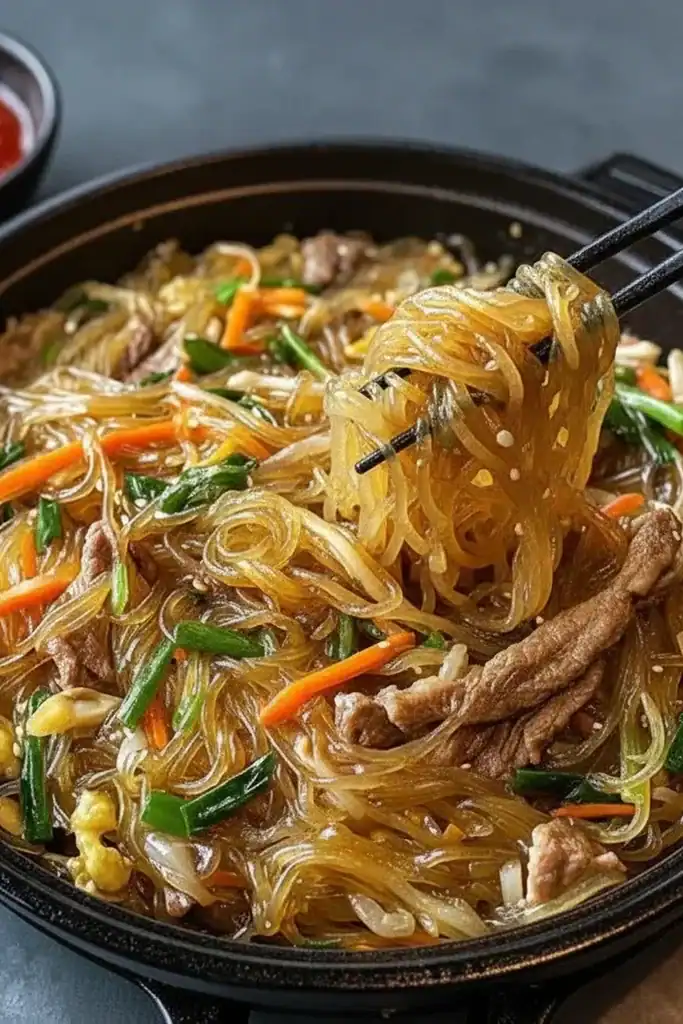
For the best results, try to find authentic Korean sweet potato noodles (dangmyeon) at an Asian supermarket or online. They have a uniquely springy, chewy texture that’s essential for this dish. I often use Kikkoman soy sauce for its consistent, well-rounded flavour. The cut of beef is also important; sirloin or ribeye, sliced very thinly, will give you the most tender results.
- For the Beef & Marinade:
- 250g sirloin steak, very thinly sliced
- 2 tbsp soy sauce
- 1 tbsp honey
- 1 tbsp toasted sesame oil
- 2 cloves garlic, minced
- 1/4 tsp black pepper
- For the Noodles & Vegetables:
- 200g dried Korean sweet potato noodles (dangmyeon)
- 1 tbsp vegetable oil, divided
- 1 large carrot, julienned
- 1 onion, thinly sliced
- 150g fresh spinach
- 100g shiitake mushrooms, sliced
- 2 spring onions, finely sliced
- For the Main Sauce:
- 4 tbsp soy sauce
- 2 tbsp honey (or brown sugar)
- 2 tbsp toasted sesame oil
- 1 tbsp toasted sesame seeds, for garnish
Sara’s Tip: To get those paper-thin beef slices, pop the steak in the freezer for about 20-30 minutes before slicing. It firms up the meat, making it much easier to cut thinly and evenly with a sharp knife.
How to Make This Japchae Sweet Potato Noodle Recipe
The process involves a few distinct stages: marinating the beef, preparing the vegetables, cooking the noodles, and then bringing it all together. It might seem like a lot of steps, but each one is straightforward, and the organised approach ensures every single ingredient is perfectly cooked.
- Marinate the Beef: In a medium bowl, combine the thinly sliced beef with 2 tbsp soy sauce, 1 tbsp honey, 1 tbsp sesame oil, minced garlic, and black pepper. Mix well to ensure every piece is coated. Set aside to marinate for at least 20 minutes at room temperature.
- Cook the Noodles: Bring a large pot of water to a rolling boil. Add the sweet potato noodles and cook according to the package directions, usually for about 6-8 minutes, or until they are soft and translucent but still have a pleasant chew.
- Rinse and Season Noodles: Drain the noodles in a colander and immediately rinse them under cold running water to stop the cooking process and prevent sticking. Once cooled, use kitchen scissors to cut the noodles into shorter, more manageable lengths (about 15-20 cm). Transfer to a large mixing bowl and toss with 1 tbsp of the main sauce mixture (see step 6) to prevent clumping.
- Sauté the Vegetables: Heat a teaspoon of vegetable oil in a large frying pan or wok over medium-high heat. Sauté the vegetables one by one, adding a little more oil as needed. Cook the onions for 2-3 minutes until softened, then the carrots for 2-3 minutes until crisp-tender, and finally the shiitake mushrooms for 3-4 minutes until golden. As each vegetable is cooked, transfer it to the large bowl with the noodles.
- Wilt the Spinach and Cook Beef: In the same pan, add the spinach and cook for 1-2 minutes, just until wilted. Squeeze out any excess water and add it to the noodle bowl. Finally, add the marinated beef to the hot pan and stir-fry for 2-3 minutes until it’s just cooked through. Add the cooked beef and any pan juices to the noodle bowl.
- Combine and Season: Prepare the main sauce by whisking together 4 tbsp soy sauce, 2 tbsp honey, and 2 tbsp sesame oil. Pour this sauce over the noodles, beef, and vegetables in the large bowl. Add the sliced spring onions.
- Toss and Serve: Using your hands (the traditional method!) or a pair of tongs, gently toss everything together until the noodles and all ingredients are evenly coated in the sauce. I find that using kitchen tongs is the best way to gently toss everything together without breaking the delicate noodles. Garnish with toasted sesame seeds and serve immediately.
Tips From My Kitchen
- Separate Cooking is Key: Don’t be tempted to throw all the vegetables into the pan at once. The technique of stir-frying each component separately is crucial for a great Japchae. It ensures that each vegetable retains its distinct flavour, colour, and crisp-tender texture.
- The Secret Noodle Step: I learned that rinsing the cooked noodles under cold water is the key to stopping them from becoming gummy and overcooked. Tossing them with a little sesame oil or sauce right after rinsing also prevents them from sticking together in one big clump.
- Make-Ahead Prep: To save time, you can do a lot of the prep in advance. The vegetables can be julienned and sliced a day ahead and stored in airtight containers in the fridge. You can also mix both the marinade and the main sauce ahead of time.
- Storage: Leftover Japchae can be stored in an airtight container in the fridge for up to 3 days. It can be enjoyed cold straight from the fridge or gently reheated in a pan or microwave. The noodles may firm up slightly when cold but will soften again upon reheating.
Equipment You’ll Need
- Large pot for boiling the noodles
- Colander
- Large frying pan or wok
- Large mixing bowl
Common Mistakes to Avoid
- Overcrowding the Pan: Cooking everything at once will cause the vegetables to steam rather than sauté. This leads to a soft, mushy texture instead of a crisp one. Cook each ingredient in a single layer for the best results.
- Under-seasoning Components: While the final sauce brings everything together, traditional Japchae often involves lightly seasoning each vegetable component with a pinch of salt as it cooks. This builds layers of flavour throughout the dish, so don’t rely solely on the final sauce.
- Overcooking the Noodles: Sweet potato noodles can go from perfectly chewy to mushy quite quickly. Follow the package timing carefully and test a strand before draining. The cold water rinse is your best friend here, as it halts the cooking process instantly.
Delicious Variations to Try
One of the best things about this Korean noodle recipe is how adaptable it is. Feel free to experiment based on what you have in your kitchen.
- Spicy Japchae: For a bit of heat, add 1-2 teaspoons of gochujang (Korean chilli paste) or a sprinkle of gochugaru (Korean chilli flakes) to the main sauce. Adjust the amount to your preferred spice level.
- Vegetarian/Vegan Option: To make a vegetarian Japchae, simply omit the beef and use more shiitake mushrooms or add some fried tofu. For a vegan version, replace the honey with maple syrup or brown sugar.
- Different Protein: This recipe works beautifully with other proteins. Try using thinly sliced chicken breast, pork loin, or even a handful of king prawns. Just adjust the cooking time accordingly. For a truly decadent meal, you could even pair this with my Bang Bang Chicken Thighs.
What to Serve With This Japchae Sweet Potato Noodle Recipe
Japchae is often served as part of a larger Korean meal, but it’s also substantial enough to be a main course on its own. Here are a few ideas for pairings:
- Kimchi: The spicy, fermented tang of kimchi provides a brilliant contrast to the savoury-sweet noodles.
- Steamed Short-Grain Rice: A small bowl of plain rice on the side helps to balance the rich flavours of the dish.
- A Light Soup: A simple, clear soup like a Korean radish soup (mu-guk) would be a lovely, warming accompaniment.
Frequently Asked Questions
Japchae Sweet Potato Noodle Recipe
Ingredients
Method
- Marinate the Beef: In a medium bowl, combine the thinly sliced beef with 2 tbsp soy sauce, 1 tbsp honey, 1 tbsp sesame oil, minced garlic, and black pepper. Mix well to ensure every piece is coated. Set aside to marinate for at least 20 minutes at room temperature.
- Cook the Noodles: Bring a large pot of water to a rolling boil. Add the sweet potato noodles and cook according to the package directions, usually for about 6-8 minutes, or until they are soft and translucent but still have a pleasant chew.
- Rinse and Season Noodles: Drain the noodles in a colander and immediately rinse them under cold running water to stop the cooking process and prevent sticking. Once cooled, use kitchen scissors to cut the noodles into shorter, more manageable lengths (about 15-20 cm). Transfer to a large mixing bowl and toss with 1 tbsp of the main sauce mixture (see step 6) to prevent clumping.
- Sauté the Vegetables: Heat a teaspoon of vegetable oil in a large frying pan or wok over medium-high heat. Sauté the vegetables one by one, adding a little more oil as needed. Cook the onions for 2-3 minutes until softened, then the carrots for 2-3 minutes until crisp-tender, and finally the shiitake mushrooms for 3-4 minutes until golden. As each vegetable is cooked, transfer it to the large bowl with the noodles.
- Wilt the Spinach and Cook Beef: In the same pan, add the spinach and cook for 1-2 minutes, just until wilted. Squeeze out any excess water and add it to the noodle bowl. Finally, add the marinated beef to the hot pan and stir-fry for 2-3 minutes until it's just cooked through. Add the cooked beef and any pan juices to the noodle bowl.
- Combine and Season: Prepare the main sauce by whisking together 4 tbsp soy sauce, 2 tbsp honey, and 2 tbsp sesame oil. Pour this sauce over the noodles, beef, and vegetables in the large bowl. Add the sliced spring onions.
- Toss and Serve: Using your hands (the traditional method!) or a pair of tongs, gently toss everything together until the noodles and all ingredients are evenly coated in the sauce. I find that using kitchen tongs is the best way to gently toss everything together without breaking the delicate noodles. Garnish with toasted sesame seeds and serve immediately.
Notes
I really hope you enjoy making this Japchae sweet potato noodle recipe. It’s a dish that takes a little effort, but the process is so rewarding, and the final result is a truly special meal that always makes my family happy. If you decide to give it a try, I’d love to hear how it turned out for you. Please leave a comment below and let me know! And if you’re looking for dessert, why not try my easy Biscoff Truffles? Happy cooking! – Sara