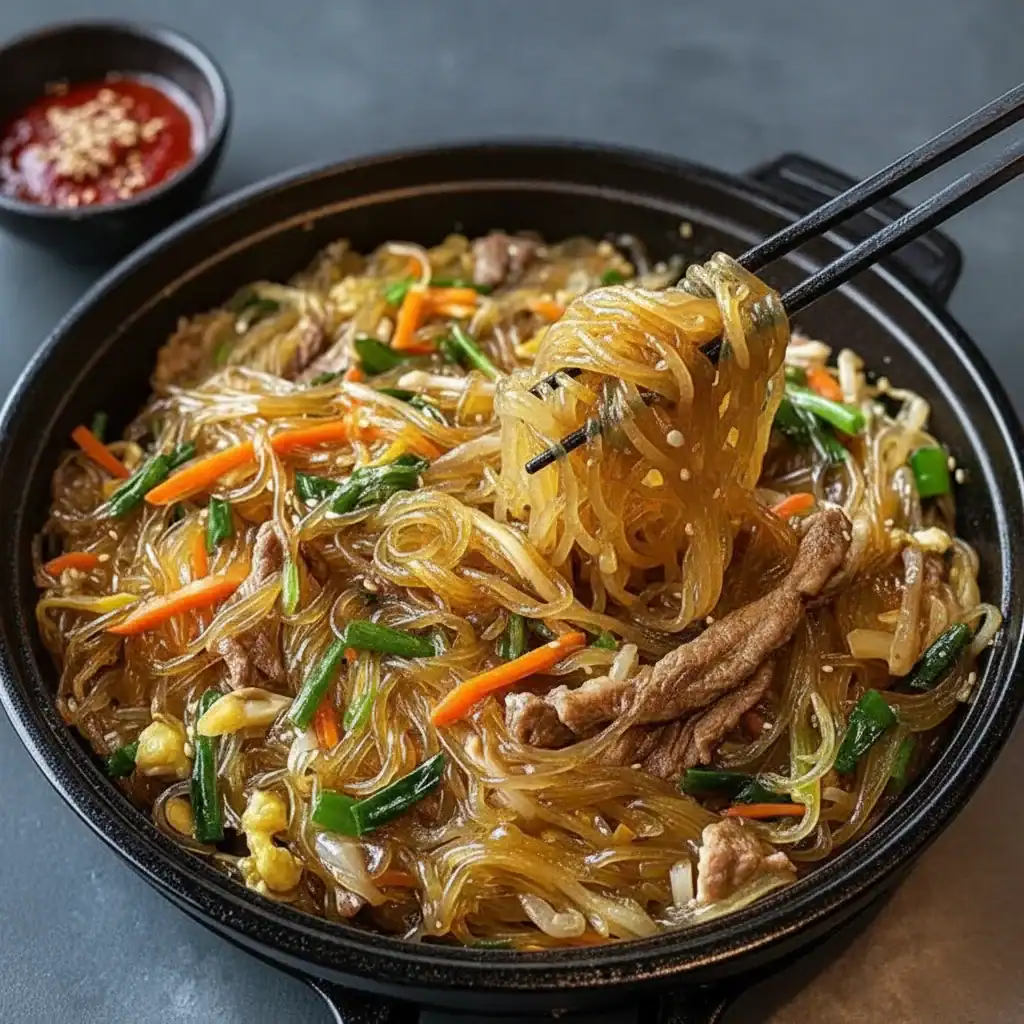
Ingredients
Method
- Marinate the Beef: In a medium bowl, combine the thinly sliced beef with 2 tbsp soy sauce, 1 tbsp honey, 1 tbsp sesame oil, minced garlic, and black pepper. Mix well to ensure every piece is coated. Set aside to marinate for at least 20 minutes at room temperature.
- Cook the Noodles: Bring a large pot of water to a rolling boil. Add the sweet potato noodles and cook according to the package directions, usually for about 6-8 minutes, or until they are soft and translucent but still have a pleasant chew.
- Rinse and Season Noodles: Drain the noodles in a colander and immediately rinse them under cold running water to stop the cooking process and prevent sticking. Once cooled, use kitchen scissors to cut the noodles into shorter, more manageable lengths (about 15-20 cm). Transfer to a large mixing bowl and toss with 1 tbsp of the main sauce mixture (see step 6) to prevent clumping.
- Sauté the Vegetables: Heat a teaspoon of vegetable oil in a large frying pan or wok over medium-high heat. Sauté the vegetables one by one, adding a little more oil as needed. Cook the onions for 2-3 minutes until softened, then the carrots for 2-3 minutes until crisp-tender, and finally the shiitake mushrooms for 3-4 minutes until golden. As each vegetable is cooked, transfer it to the large bowl with the noodles.
- Wilt the Spinach and Cook Beef: In the same pan, add the spinach and cook for 1-2 minutes, just until wilted. Squeeze out any excess water and add it to the noodle bowl. Finally, add the marinated beef to the hot pan and stir-fry for 2-3 minutes until it's just cooked through. Add the cooked beef and any pan juices to the noodle bowl.
- Combine and Season: Prepare the main sauce by whisking together 4 tbsp soy sauce, 2 tbsp honey, and 2 tbsp sesame oil. Pour this sauce over the noodles, beef, and vegetables in the large bowl. Add the sliced spring onions.
- Toss and Serve: Using your hands (the traditional method!) or a pair of tongs, gently toss everything together until the noodles and all ingredients are evenly coated in the sauce. I find that using kitchen tongs is the best way to gently toss everything together without breaking the delicate noodles. Garnish with toasted sesame seeds and serve immediately.
Notes
Japchae can be served warm, at room temperature, or cold. Store leftovers in an airtight container in the refrigerator for up to 3 days.