Ingredients
Method
- Prepare the Eggs: Crack the 6 eggs into a medium-sized bowl. Add a pinch of salt and a few grinds of black pepper. Whisk them together thoroughly with a fork or a whisk for about 30-40 seconds, until the whites and yolks are completely combined and the mixture is one uniform colour with a slightly frothy top. Don't add any milk or cream at this stage.
- Start with a Cold Pan: Place a non-stick frying pan over a low heat. It’s crucial that the pan is not pre-heated. Add the cubed, cold unsalted butter to the pan.
- Melt and Mix: As the butter begins to melt slowly, pour the whisked egg mixture into the pan. Use a silicone spatula or a wooden spoon to stir the eggs and butter together continuously.
- Cook Low and Slow: Keep the pan on the lowest possible heat setting. Continue to stir the eggs constantly, making slow figure-of-eight motions across the bottom of the pan. This prevents any part of the egg from catching and overcooking. What works best for me is to never stop moving the spatula.
- Watch for Curds: After about 4-5 minutes, you'll notice the mixture starting to thicken and small, soft curds beginning to form. Keep stirring, scraping the sides and bottom of the pan. The goal is a texture that looks like a loose, creamy porridge.
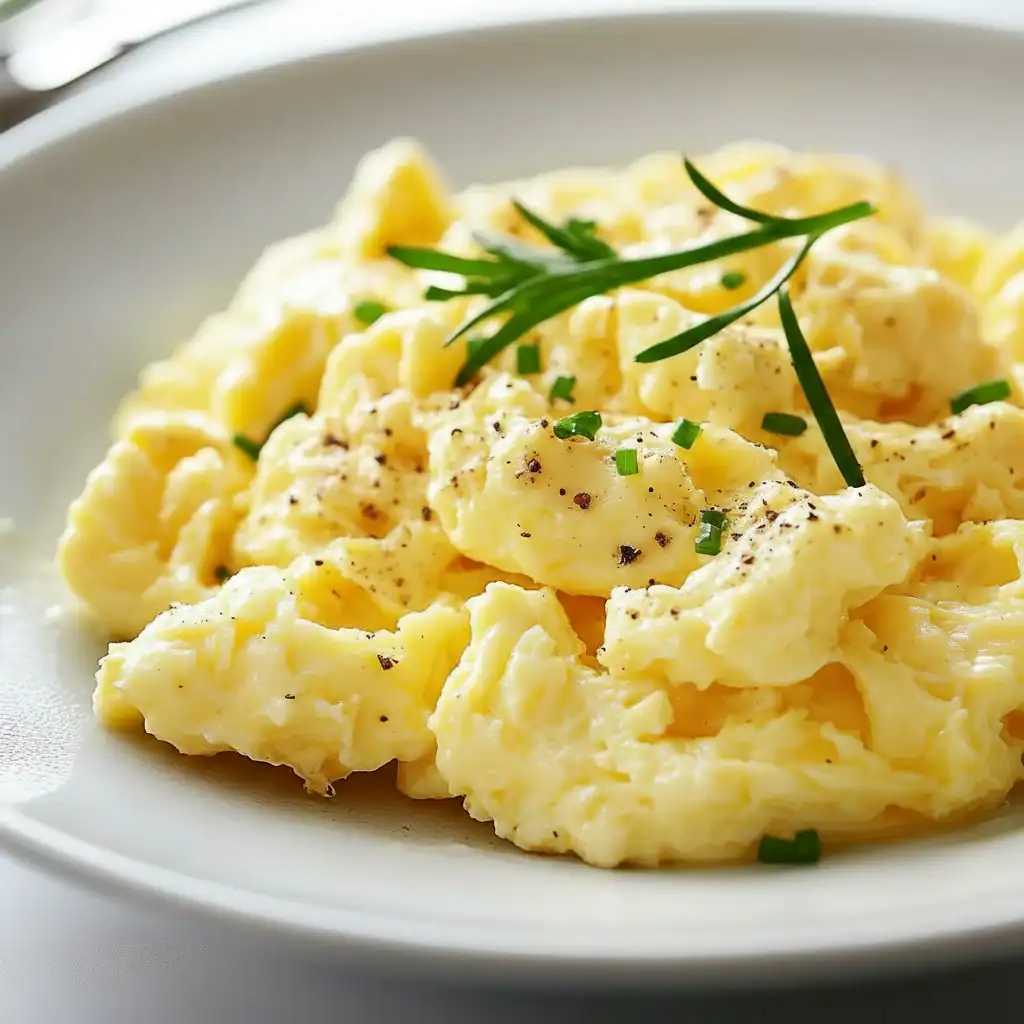
- The Critical Moment: Continue cooking for another 2-3 minutes until the eggs are about 80% cooked. They should still look very soft, slightly wet, and have a gentle wobble. This is the most important step! Immediately remove the pan from the heat. The residual heat will continue to cook them.
- Add the Finishing Touches: Off the heat, gently stir in the 2 tablespoons of crème fraîche and most of the chopped chives. The cold crème fraîche not only adds a wonderful creamy tang but also helps to stop the cooking process right at the perfect point.
- Serve Immediately: Give the eggs a final gentle stir, taste, and adjust the seasoning with a little more salt and pepper if needed. Serve at once, garnished with the remaining chives.
Notes
Serve immediately on warm toast. The residual heat will continue to cook the eggs, so it's best to take them off the heat when they are slightly underdone.