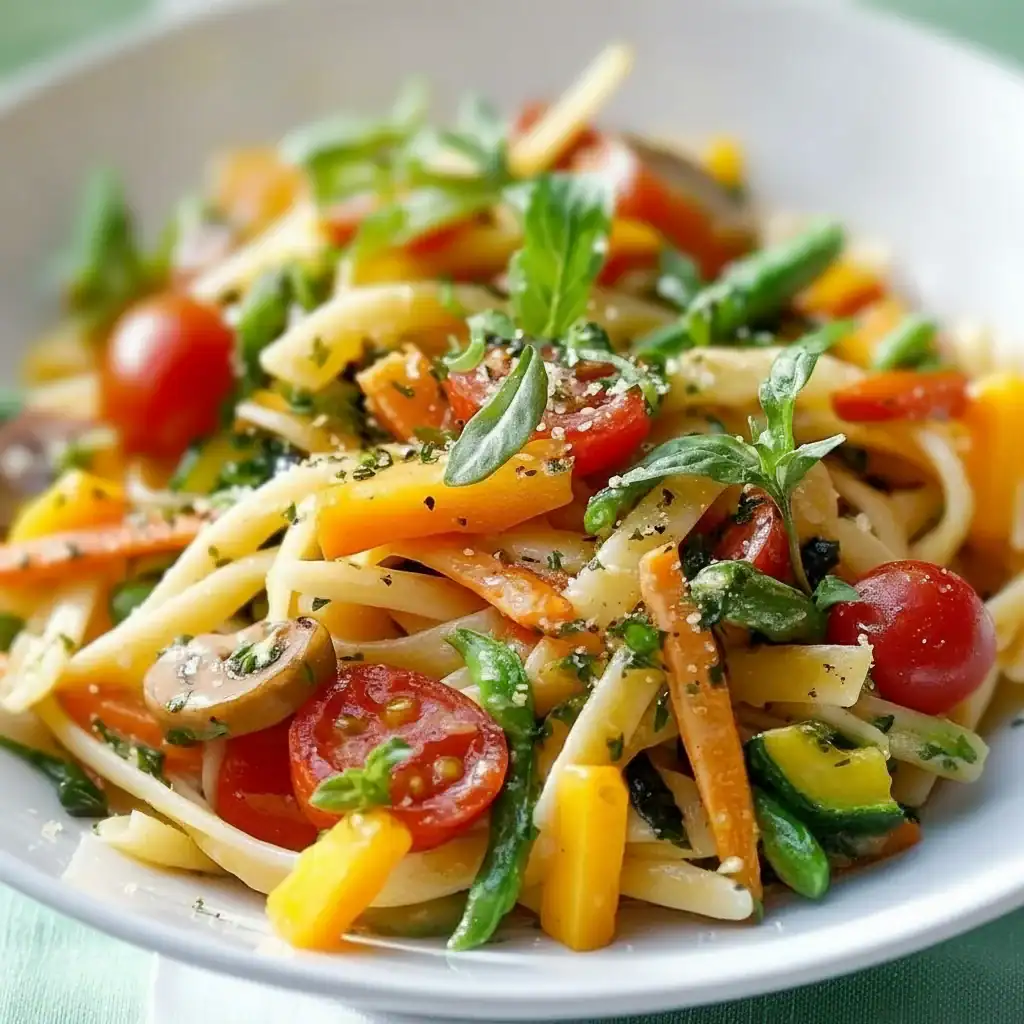
Ingredients
Method
- Cook the Pasta: Bring a large pot of heavily salted water to a rolling boil. Add the pasta and cook according to package directions until al dente. Just before draining, reserve about 300ml (a large mugful) of the starchy pasta water. Drain the pasta and set aside.
- Sauté the Aromatics: While the pasta is cooking, heat the olive oil in a large frying pan over a medium heat. Add the diced shallot and cook for 2-3 minutes until softened and translucent. Add the minced garlic and cook for another minute until fragrant, being careful not to let it burn.
- Cook the Vegetables: Add the chopped asparagus and diced courgette to the pan. Season with a pinch of salt and pepper. Sauté for 5-7 minutes, stirring occasionally, until the vegetables are crisp-tender. You want them to have a slight bite.
- Add the Peas: Stir in the frozen peas and cook for another 2 minutes until they are bright green and heated through.
- Prepare the Sauce Base: In a small bowl, whisk together the grated Parmesan, egg yolk, and lemon zest. This will form a thick paste.
- Create the Sauce: Turn the heat on the frying pan down to low. Add the cooked, drained pasta to the pan with the vegetables. Pour in about 150ml of the reserved hot pasta water and stir vigorously to coat everything.
- Emulsify: Add the Parmesan and egg yolk mixture to the pan. It's important to do this off the heat or on a very low heat to prevent the egg from scrambling. Toss everything together continuously using tongs. The heat from the pasta and the water will cook the yolk and melt the cheese, creating a glossy, creamy sauce that clings to the pasta. What works best for me is to keep tossing and adding small splashes of pasta water until the sauce reaches the desired consistency.
- Finishing Touches: Stir in the lemon juice, chopped mint, and parsley. Taste and adjust the seasoning with more salt and pepper if needed. Serve immediately, garnished with an extra grating of Parmesan cheese.
Notes
For best results, use the starchy pasta water as instructed; it's the key to creating a creamy, emulsified sauce without using heavy cream. This dish is best enjoyed immediately.